

An alternate future
The Great Vhembe Conservation Area
The natural solution to unemployment and poverty
Fortunately, there is an alternate future for the Vhembe. One that rests on protecting its rich natural capital endowment to support a thriving biodiversity-based economy, leveraging land reform to achieve inclusive and sustainable growth under the Biodiversity Stewardship and Protected Areas framework.
What’s more, it may be a startling case of Dr Jekyll & Mr Hyde, but it is the South African government with wide stakeholder support that has conceived the vision and charted the way to a green and flourishing Vhembe.
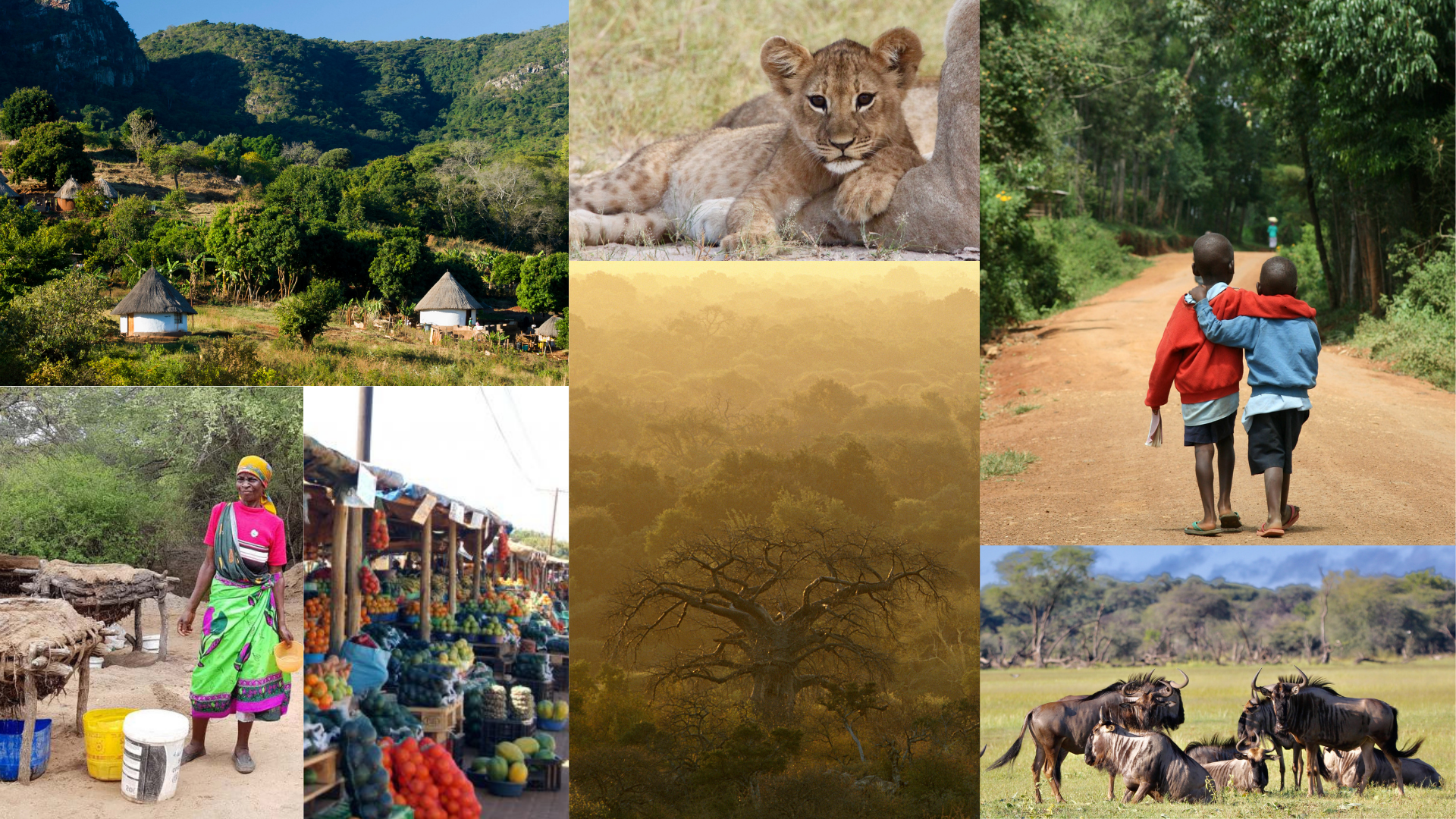
A wild opportunity
Seismic shifts in the global economic and political landscape are creating new opportunities for which the Vhembe is ideally positioned. As the value of eco-systems services is recognised, along with the biodiversity sustained by functioning ecosystems, the planet’s remaining intact natural areas have become more valuable than ever. What was once a weakness through the prism of economic development has become a strength…
Wild, remote and largely undeveloped, the Vhembe possesses abundant natural capital that has the potential to be utilised sustainably and for the immediate benefit of local communities, for comparatively little financial investment and no collateral damage to either other industries or the environment – in sharp contrast to exploitation of coal and mineral resources. Government and the private sector have recognized the opportunity…

A visionary plan
Government’s ambitious development plan for the Vhembe based on sustainable use of its renewable natural resources contains two key elements:
Creation of the Great Vhembe Conservation Area
1) The expansion and integration of the extensive but fragmented Protected Areas Network in the Vhembe to create a vast landscape-scale bio-geographic ecological corridor linking the Mapungubwe and Great Limpopo Trans-Frontier Conservation Areas along the Limpopo River Valley and across the Soutpansberg Mountains, by incorporating under the Biodiversity Stewardship Programme both-
privately-owned wildlife ranches and
community-held land
in critical biodiversity areas, which will provide the underpinning for the biodiversity-based economy.
A biodiversity economy built on community-owned land
2) A stimulus package to accelerate growth of -
the tourism industry;
the wildlife economy and bio-prospecting industry and
emerging opportunities in nature based solutions to the climate and environmental crisis, including carbon sequestration
– with a strong focus on support programmes for locally-owned small businesses and leveraging Limpopo’s extensive land reform programme for transformation and inclusive economic growth of the biodiversity-based sector.
-
Vhembe District Bioregional Plan, 2017
The Limpopo Department of Economic Development, Environment and Tourism (LEDET) 2017 Bioregional Plan for the Vhembe District is a land use and spatial planning instrument based on the Critical Biodiversity Area maps developed in the Limpopo Conservation Plan v2, 2013.
It incorporates the Limpopo Protected Areas Expansion Strategy, 2014 (LPAES) and the updated CBA mapping of 2017.
The Bioregional Plan mirrors the revised Zonation Plan of the UNESCO Vhembe Biosphere Reserve (VBR), while the VBR’s Biodiversity Conservation Strategy, 2019, augments LPAES.
-
-
The Vhembe Biosphere Reserve’s 2019 Biodiversity Conservation Strategy to achieve its revised Zonation Plan, is closely aligned with the latest version of the LCP (LCP v3 as per the 2017 Vhembe Bioregional Plan, and LPAES: Core areas map to CBA 1 and 2 areas; Buffer zones map to Ecological Support Areas ESAs of the updated CBA survey and maps by SANBI.
-
The National Department of Planning, Monitoring and Evaluation facilitated an “implementation lab” to accelerate roll-out of the National Biodiversity Economy Strategy (identified as a strategic sector for the realisation of South Africa’s National Development Plan). The output of the “Operation Phakisa for the Biodiversity Economy” process, which drew on wide stakeholder participation, is a results-focused programme of initiatives and action plans with enormous potential now under the direction of the DFFE. Take a quick look below …

View a selection of documents and maps related to the Vhembe and Limpopo Conservation Plans and Protected Areas Expansion Strategy, including the ‘least-cost expert pathway’ to create macro-scale bio-geographic ecological corridors in the Limpopo Valley and Soutpansberg on the Resources page.
View a selection of reports and presentations on the Biodiversity Economy Strategy and the plans for its accelerated implementation under the national Department of Forestry, Fisheries and the Environment (DFFE) Operation Phakisa for the Biodiversity Economy Programme here or visit the Resources page.

A compelling cost-benefit case
-
The biodiversity economy’s capacity to generate low-skilled jobs and in rural areas makes its development of vital importance to grappling with South Africa’s unemployment crisis and uneven development.
Already the biodiversity economy and tourism industry employ more people than mining and agriculture combined and the growth potential is explosive.
What’s more, the biodiversity sector is not capital intensive, so the returns in jobs and opportunities for SMMEs are high - and that’s before ecosystems services and other benefits intact natural areas are taken into account.
-
The biodiversity economy is a fit for the Vhembe, which is blessed with an abundance of high biodiversity land, natural beauty and a deep sense of place.
By contrast, the region is poorly adapted for industry: Viability of any industrial development is undermined by the cost of overcoming the many handicaps of building factories in the remote Outback.
Water, for example, is the biggest limiting factor in Limpopo, but since native species are well adapted to the conditions, this ‘constraint’ doesn’t constrain the wildlife, bioprospecting and tourism industries.
-
In contrast to the SEZ model, where ownership and benefits are heavily skewed in favour of big business and foreign interests, the biodiversity economy model is built on local community-owned assets.
The state has already spent the capital to acquire land for redistribution to poor rural communities - more than half of all farmland in Limpopo is now black-owned - and many of those properties still posses high biodiversity value. With targeted support programmes, the inclusive and transformative growth potential is unbounded.

“Rand for Rand investment in the tourism industry is 40x more efficient at creating jobs and 10x more efficient at earning forex than the mining sector.”

Emerging conflicts and a stalled growth engine
Operation Phakisa’s stillbirth in the Vhembe
Despite the time and resources spent developing actions plans and the exciting potential economic returns, Operation Phakisa initiatives have only been partially implemented in Limpopo. Many are stillborn. Much of the land in community hands is still woefully under-utilised and is being gradually degraded.
The suppression of the Vhembe Bioregional Plan
LEDET’s Bioregional Plan for the Vhembe has never been published despite sign-off. No explanation from LEDET is forthcoming, but it is telling that the Bioregional Plan explicitly identifies the conflicts with the new coal mining and industrial development plans for the MMSEZ that are also backed by the inherently conflicted LEDET.

The campaign
The lack of a binding land use and integrated development plan balancing the demands of competing sectors; strong water governance and a transformation-geared kick-start of the biodiversity economy, has predictably led to the gradual erosion of the Vhembe’s real asset - high-biodiversity value land; over-exploitation of water resources; limp economic growth and a perpetuation of Apartheid-era economic schisms despite the substantial investment in land restitution.
Persistent poverty is now being cynically used by the same government whose negligence has entrenched it, in order to justify the expansion of coal mining and heavy industry under foreign-ownership and control that will forever destroy the Vhembe’s natural capital along with its potential to uplift local communities.
In the face of this threat, Living Limpopo campaigns to compel government:
To recognise the conflicts between its earlier and later economic development plans for Limpopo’s north.
To acknowledge the fallacy of the economic rationale for the MM-SEZ’s coal-fueled steel manufacturing plan that will benefit only the coal mining industry and foreign interests.
To abandon this latter-day Scorched Earth Policy, enact the Vhembe Bioregional Plan and do what Operation Phakisa for the Biodiversity Economy says - Phakisa!

